

Welcome back readers, and welcome, new readers –
It’s a year since the sudden passing of our friend and sister Esther Keiderling at age 28. A loss like this is hard to fathom.
As we grieved her and missed her, it was natural to reread things she wrote as well as some of the writing she admired. Esther was a lover of poetry and a writer of poems, an essayist and a canny observer of both herself and the people around her. She had a gift for seeing significance in life’s mundane details and connecting them to the goal of our hope, the coming Kingdom where every tear will be dried. All these qualities, as well as Esther’s trademark humor, are evident in her wonderful short essay “Cookies are a Call to Community” which she wrote in 2025. (This and much more of her writing has been edited into a forthcoming book, My Soul Comes With Me.) We would like you, our readers, to meet Esther in her own words and in our memories of her, knowing that one day we will all meet in person and, as Esther writes below, we’ll be feasting together.
Cookies Are a Call to Community
It’s invigorating to bake cookies. The joy of creating a completely new object from a few disparate scraps such as flour, sugar, baking soda, and eggs is only surpassed by the joy of eating that object. Although I am no chef, I have always loved a little baking project here and there when I have the time and energy.
I was talking to my sister recently, and she said she hardly ever bakes anymore because if she would bake something, there would be no one to eat it. I can identify with the pressure to eat the things I bake if no one else does, but for the most part, I am very lucky to have many willing eaters. Cookies are a call to community. Seeing a plate or jar of cookies is a bright spot in a humdrum day. Even the slightest break from a mind-deadening routine in the form of a new sight, a new color, can uplift people’s moods. The sight of cookies is unexpected and the color combines with the scent to play on the most resistant imagination.
Sometimes when I come home from work, I imagine that maybe a loving and motherly neighbor, who has been watching me and seeing the longing for cookies in my eyes, will have been moved to bake me a dozen chocolate chip, or peanut butter cookies. They will have been somewhat ambivalent about the idea, wondering if I might think it was weird. After many days, they will not have been able to get the urge out of their mind. “Esther needs cookies and that’s all there is to it,” they will have thought. I walk to my room and pause at the threshold. Is there going to be a plate of cookies on my bed? I won’t know until I actually see my empty bed, so I cherish at least three seconds of anticipation before the inevitable disappointment.
Baking things is my preferred method of showing support to people. In memoirs about traumatic events, people often mention the many casseroles they received after the death of their loved one. They often write something to this effect, “why does death bring so many casseroles?” or “after everyone came and brought casseroles, I was left to cry in my empty house.” I understand their frustration with all these casseroles that they can’t possibly eat, as well as the undeniable fact that casseroles cannot replace a loved person who has died. I think they know, however, from times when they were on the casserole-bringing end of things, that bringing food to grieving people often feels like the only option. It is symbolism used to tell the person who is grieving to stay alive and know that others love them and want them to keep living. Food is essential to life, and if we must have food I think we should have pleasurable food. Peanut butter cookies for protein, and chocolate chip cookies as antidepressants.
When I was a kid and first learned how to bake, I made a coffeecake for my family’s breakfast every day. People laughed and called me “coffee cake Esther,” but I’ve observed other kids doing the same thing. You don’t have to be a famous chef to make coffee cakes, and cake always starts the day off right. Which kid doesn’t want the power to start a day off right? The power feels like a warm glowing energy over the breakfast table that has nothing to do with caffeine.
Later on, I got a fudge-making kit for my birthday. Never Fail Fudge is a recipe posted on the sides of Marshmallow Fluff containers. It never fails to be thrilling at every stage of the process, from stickily scraping the marshmallow fluff container, stirring the bubbling mixture, to eating finished fudge, and arranging it in decorative containers to give as gifts. This Never Fail Fudge is several cuts above any cornstarch or cocoa recipes, and everyone who I gifted it to was impressed. I often chose to give it to people who were discouraged or had suffered bereavement. I have no idea if they felt burdened by having to eat my fudge, but the combination of fudge being what it is, and me, a self-conscious 12-year-old girl obviously exerting tremendous effort just to gain enough courage to approach them, was enough impetus for them to force a smile and say, “Thank you, we love fudge.”
Why is food so important? Why is God’s kingdom spoken of so often as a feast? As a child, I used to always imagine that there would be long tables filled with all my favorite things like mint ice cream, chocolate, puff pastry, and dumplings. But the “best foods” are certainly not objective to the whole human race. Adult me realizes that some people will not be happy with an unhealthy feast or wedding banquet. They will want to have some quinoa salad, or at least a few fresh vegetables. Then, there will be some unrest where young teenage boys will refuse to eat any vegetables, and their mothers will say, “What are you thinking? Can’t you see this is the wedding banquet? The Feast? You’ve got to eat your vegetables otherwise you’ll be shut out in the darkness.”
It’s a mystery. When everyone is resurrected and becomes new, they will also have new bodies and new minds. If we happen to still be alive at the time, I assume we will change as well. Then maybe we won’t need to eat anything anymore, eating will just be a waste of time and all the feast metaphors in the Bible will turn out to be nothing more than metaphors. But that would be a real bummer. I hope we have some kind of feast. To me, chocolate seems like a pretty safe and unifying option for the human race resurrected to enjoy together.
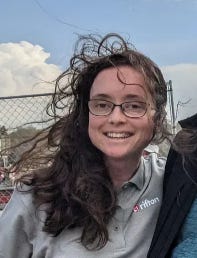
remembering our friend Esther
Kacey
Esther and I became close friends in the year and a half before she passed while living at the Maple Ridge Bruderhof community. She was someone I could really share from the heart with, especially about books and discipleship. She was caring, funny, and passionate. Sometimes upon opening my laundry bag full of clean clothes from the communal laundry, I would randomly find a little present tucked inside, like chocolates or a seltzer, and I always knew who the mystery giver was—Esther!! She came to our family breakfast on Saturday mornings and would often bring something she baked, or surprise our kids with a little something special like a puzzle or chalk. I loved how her name would often pop up in my inbox after a conversation that we had, to follow up about or clarify something one of us had said. I can find it hard to make and sustain new friendships, so it meant a lot to me how persistent she was about connecting once we had met. I miss her and it’s still very hard to fathom her being gone, but I’m happy knowing she’s free and with the Lord. In honor of Esther’s love of poetry and how she processed life through writing, here’s a poem I found that she published online in 2020:
For My Friend
One day we’ll get in the golf cart and go
Far away from the world of people
Saying you can’t or just don’t
We’ll go to a place where the wildflowers bloom
Marie in the meadow will look up
At us, the greatest meadow women
We’ll walk, free of burdens
We’ll laugh, free of fear
You know, being here
Meeting you, gives me hope
I see you at the end of a tunnel
Laughing and saying come on
I’m waiting for you
Out here in the sun
Marianne
Over the past year I’ve thought a lot about Esther, who I knew for most of her life because our families were next-door neighbors for most of her childhood and my young adulthood. The word that I keep thinking of in connection with her is courageous, a quality she shared with her namesake Queen Esther. As for all of us, life was tricky for Esther sometimes, but whatever happened she forged forward with her eyes on the horizon, endlessly curious about the world and people around her, voraciously reading and recommending books, and looking for ways to challenge herself.
Gerard Manley Hopkins was one of Esther’s favorite poets, and “God’s Grandeur” was one of her favorite poems. I think she could identify with Hopkins’ ability to describe our most desperate moments (the “cliffs of fall / Frightful, sheer, no-man-fathomed”) and the loveliness of Nature’s imperfections (“All things counter, original, spare, strange”), but most of all his unrestrained praise of the Creator and delight in creation.
God’s Grandeur
The world is charged with the grandeur of God.
   It will flame out, like shining from shook foil;
   It gathers to a greatness, like the ooze of oil
Crushed. Why do men then now not reck his rod?
Generations have trod, have trod, have trod;
   And all is seared with trade; bleared, smeared with toil;
   And wears man’s smudge and shares man’s smell: the soil
Is bare now, nor can foot feel, being shod.
And for all this, nature is never spent;
   There lives the dearest freshness deep down things;
And though the last lights off the black West went
   Oh, morning, at the brown brink eastward, springs —
Because the Holy Ghost over the bent
   World broods with warm breast and with ah! bright wings.
Maureen
Last year when we heard of Esther’s passing, these lines were running through my mind – words that somehow express how I picture Esther…how she lived, and the view from which she saw life, just as an eagle would – taking in the great sweep of God’s beautiful earth, but with eyes that could catch the smallest detail, ears that heard the quietest whisper, prayer, or cry.
And there is a Catskill eagle in some souls that can alike dive down into the blackest gorges, and soar out of them again and become invisible in the sunny spaces. And even if he forever flies within the gorge, that gorge is in the mountains; so that even in his lowest swoop the mountain eagle is still higher than the other birds upon the plain, even though they soar.
Herman Melville
She was like a daughter to Jason and me, and our children consider her their sister. Most of all, I will always treasure the chance I had to read her thoughts just as they spilled out onto a paper, things perhaps impossible to say, set free in black and white (through which she could prism every color imaginable). In a sense, whether her writing found a “home” on this site or that magazine was beside the point. She was talking to the universe, and whoever in it was able to listen. The beauty and sensitivity of her soul was right there, clearly legible.
Recently we remembered the piece she wrote for Plough’s issue Why we Make Music issue about singing around a campfire, so we read it together. It is so wry and humorous, but also gets straight to the heart of things:
Folks who shrink from the spotlight may find their voices by firelight, and the lonely or discouraged may find heart as the sparks fly up and someone asks, “Do you know this one?” …We’re just a link in the music chain, giving the songs a chance to live on.
Norann
When Esther visited my community in Australia, I introduced her to the poetry of Mary Oliver. She especially liked “The Uses of Sorrow”, probably because it reflects a courageous attitude to difficulty:
(In my sleep I dreamed this poem)
Someone I loved once gave me
a box full of darkness.
It took me years to understand
that this, too, was a gift.

Trudi
This evening I sang a song for Esther, in the way she loved to do: unprofessional, unplanned. We were eating a picnic dinner with a random handful of people. We conversed with a mishmash of languages, enjoyed some good food, and then I mentioned my wish to sing something for Esther.
Out came a guitar, a ukulele, a harmonica. We tried a folk song, one that I’m sure was part of Esther’s repertoire: Bob Dylan’s singable “Blowing in the Wind”. We didn’t choose it for its words—we stumbled on the verses, and two participants couldn’t understand the English lyrics anyway. The important thing was being together, and remembering Esther by doing something she loved to do.
When I think of Esther, I see a peer, full of energy and passion, and yet gentle and compassionate too. She left us at age twenty-eight—my age this year—but while on earth, she embraced life, struggling through the hells it presented, finding joy through a deep faith in God, and fully appreciating the small beauties of the world and people around her. I think Esther allowed the natural world to fill her heart with awe and wonder, as we all should. The first verse of this E.E. Cummings’s poem comes to mind:
i thank You God for most this amazing
day:for the leaping greenly spirits of trees
and a blue true dream of sky;and for everything
which is natural which is infinite which is yes”
-from, “i thank You God for most this amazing” by e.e. cummings
Esther, you remain in our hearts. You inspire me to live fully. Thank you—
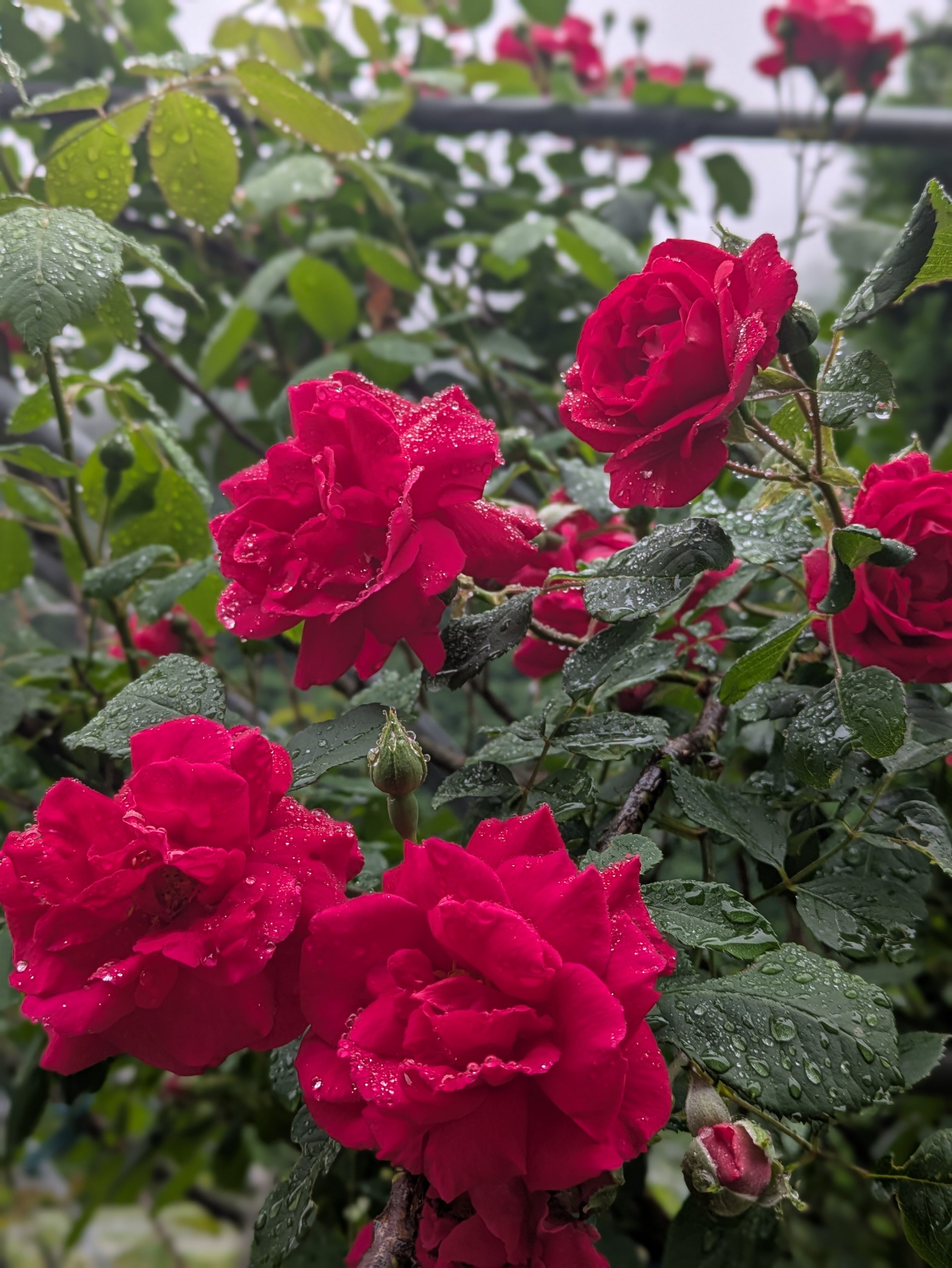


That’s all for now folks. Enjoy the season you’re in, and don’t forget to read or write a poem, be courageous, and make cookies for someone you love: peanut butter for protein, and chocolate chip for happiness.
Esther will never be forgotten! Thank you for remembering her .. I don't know how many batches of never fail fudge we made together and then when my daughter was 12 she started making it too!!